Industries
Medical & Healthcare
Hospitals, medical centers and extended care facilities carry a unique responsibility: caring for people at their most vulnerable moments. In a clinical environment, cleaning is part of patient safety — and the protocol, the products and the crew’s conduct all have to hold up to scrutiny.
The challenge
What makes a medical facility hard to clean well.
Infection control is the job
Waiting rooms concentrate sick people; exam rooms turn over all day. Disinfection has to follow protocol order with honoured dwell times and EPA-registered products. A clean appearance is a by-product of doing that correctly — never the goal itself.
Regulated materials everywhere
Sharps containers, regulated waste, medications and protected health information are all present in a clinic after hours. A cleaning crew needs bright-line rules about what they touch and what they never touch, written down before the first shift.
Inspection readiness
Clinics answer to payers, accreditors and compliance audits. Your cleaning vendor should produce documentation that helps you pass those inspections: who cleans, with what, and how often.
What we prioritise
Built around your infection-control plan.
- Protocol-ordered disinfection of exam rooms and high-touch clinical surfaces
- OSHA bloodborne pathogen trained technicians on every medical account
- HIPAA-aware conduct: no contact with records, no photography, badge in and badge out
- Documented products, dwell times and inspection logs your compliance officer can review
- Strict separation of clinical, restroom and administrative cleaning tools
- Waiting-room presentation held through the day with day porter coverage
- Terminal-style deep cleans and carpet extraction on a scheduled cycle
A representative program
What a clinic scope looks like.
Your scope is built to your facility’s clinical requirements during the site walk. This is the shape it usually takes.
Every visit
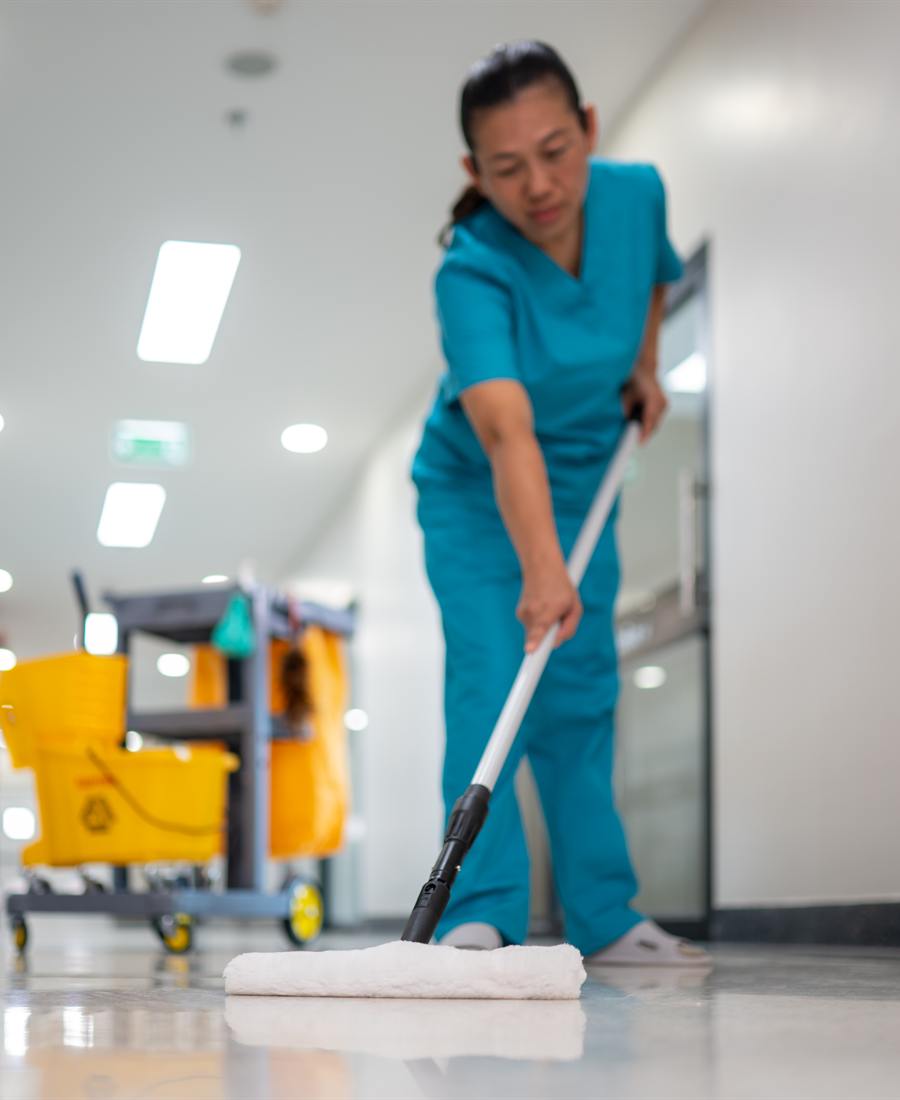
- Clean and disinfect exam rooms in protocol order: high-touch surfaces, exam tables, counters
- Apply EPA-registered disinfectants with manufacturer-specified dwell times
- Disinfect waiting-room seating, check-in counters, door hardware and handrails
- Clean and disinfect restrooms to healthcare protocol
- Damp-mop all hard floors with hospital-grade disinfectant
- Wipe nurse stations and reception work surfaces, leaving papers and records untouched
- Empty general waste only — regulated medical waste stays with your licensed hauler
- Restock hand-sanitiser stations, soap and paper dispensers
Weekly and monthly
- High-dust vents, returns and horizontal ledges in patient areas
- Vacuum and spot-treat waiting-room upholstery and carpet
- Spot-wash walls, doors and kick plates in corridors and exam rooms
- Machine-scrub hard floors in clinical areas
- Detail baseboards, corners and floor edges
- Coordinate cubicle-curtain rotation with your clinical staff
Quarterly
- Terminal-style deep clean of common and clinical support areas
- Carpet extraction in administrative and waiting areas
- Formal program review against your infection-control requirements
How we describe our compliance posture
Our medical accounts are built around OSHA’s Bloodborne Pathogens standard (29 CFR 1910.1030), EPA-registered disinfectant selection and HIPAA-aware crew conduct. We describe these as our operating protocols and training standards. They carry no accreditation and no clinical guarantee, and we will review each one with your compliance or infection-control lead during onboarding.